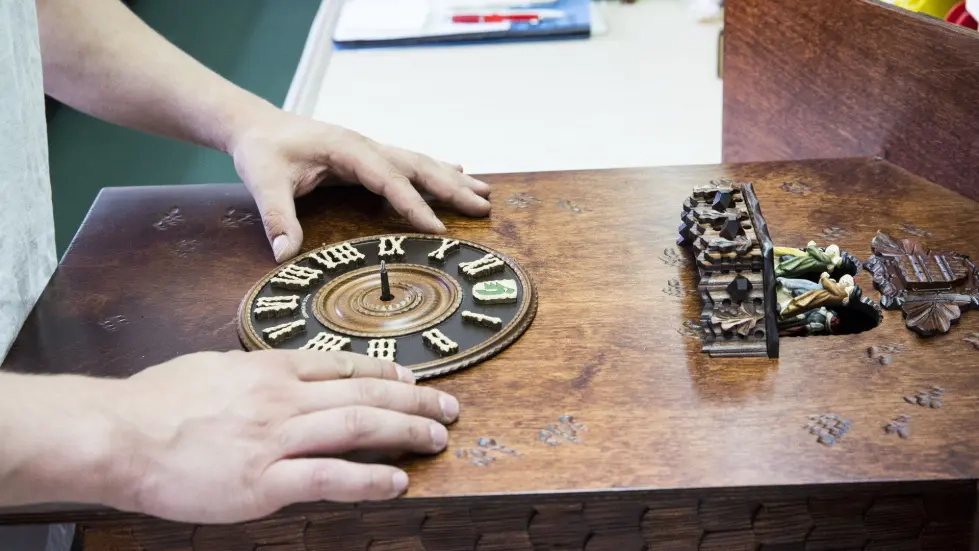
A properly installed cuckoo clock runs better and lasts longer. All you need is a solid wall, a screw at the right height and a few minutes to free the mechanism and adjust its tick-tock.
Choosing the right spot
Choose a flat, solid wall that can support the clock and its weights. Keep it away from radiators, fireplaces and windows exposed to damp, which are hard on the wood.
On a mechanical cuckoo clock, the weights descend over the hours: they must never touch the floor or a piece of furniture. Before buying, check the size of the clock against the space available.
Removing the transport locks
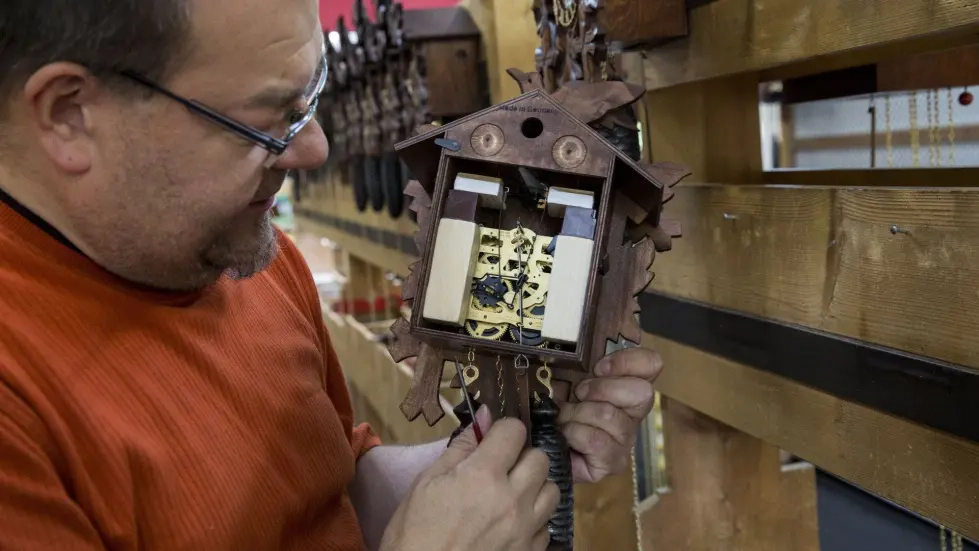
Before hanging the clock, remove the transport locks following your model’s instructions: the small clips holding the bellows and the paper strip inside the case. Keep them safe for any future move.
Fixing and hanging the clock
Drive in a sturdy nail, or a screw with a wall plug suited to your wall, between 1.80 m and 2 m above the floor (about 6 to 6.5 feet), angled slightly upwards. Leave it sticking out by about a thumb’s width.
Hang the clock by the round opening at the top of its back, straight and flat against the wall. Then move aside the small wire that holds the bird’s door shut.
Fitting the chains, pendulum and weights
Remove the wire holding the chains under the case, then let them drop gently, undoing any knots. From this point on, never lay the clock down: the chains could slip off their wheels.
Hang the pendulum in its guide, then the weights on the chain hooks: two weights on a standard cuckoo clock, three on a musical cuckoo clock.
Setting the clock in beat
Give the pendulum a gentle push. It should swing freely, without rubbing against the case, and the tick-tock should be perfectly even. If not, shift the clock very slightly to the left or right until the beat is even. All that remains is to set the time.
A quartz cuckoo clock is hung in the same way, but it has no chains to release and no beat to adjust: once it hangs straight, simply insert the batteries.