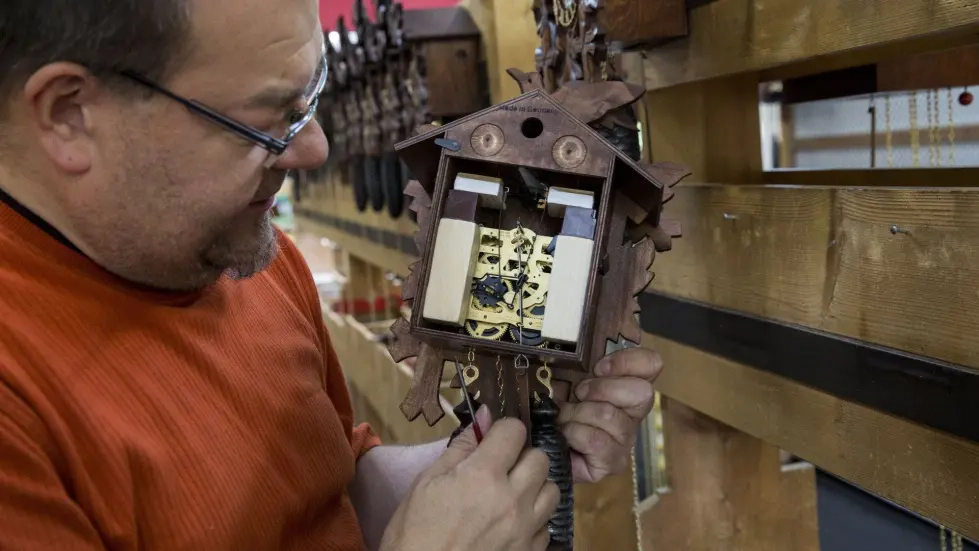
A mechanical cuckoo clock works without batteries or electricity: everything it does, from moving the hands to the bird’s call, comes from its weights. Here is how this small mechanism turns the slow descent of a weight into a call right on the hour.
The weights, a source of energy
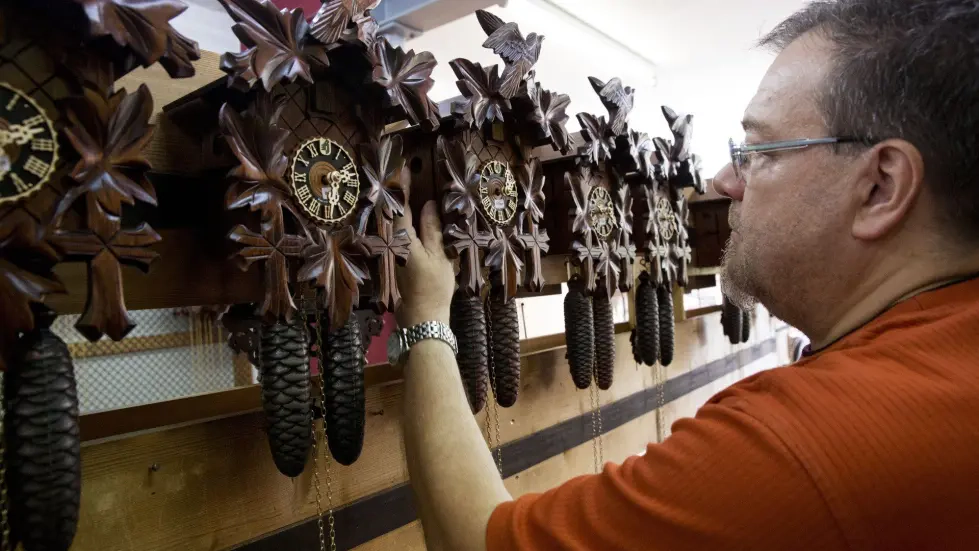
The cast-iron weights, shaped like pine cones, hang from chains. As they slowly descend, they turn the wheels of the movement. Each has its own role: one drives the hands, another the call, and a third the music on musical models. They need winding every day or every week, depending on the type of movement.
The pendulum, keeper of regularity
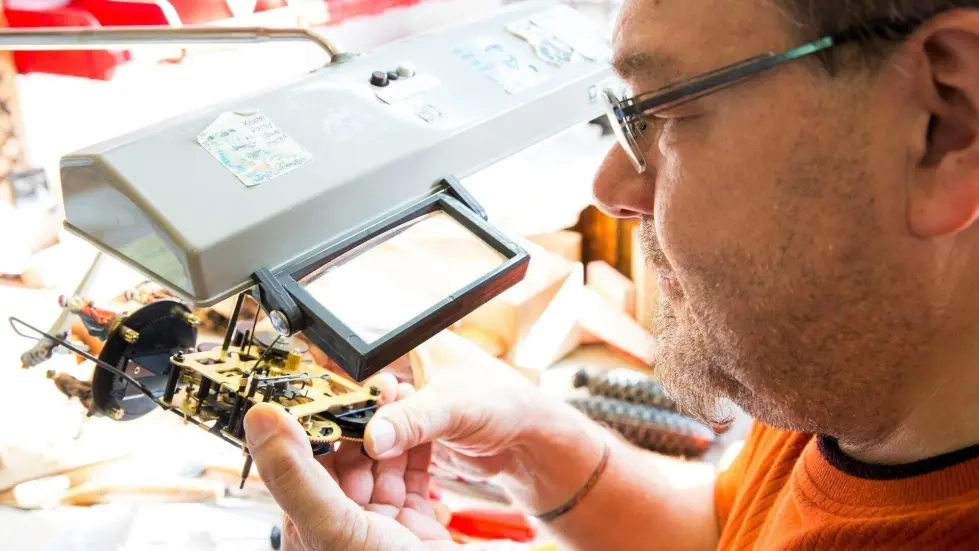
Left to themselves, the weights would drop all at once. The pendulum controls their descent: with each swing, it lets the movement advance by one notch, which produces the tick-tock. Moving its disc up or down makes the clock run faster or slower, which is why it pays to adjust the rate carefully.
Striking on the hour
Between hours, the striking mechanism stays locked. When the minute hand reaches 12, a catch is released: a toothed lever, the rack, drops onto a snail, a stepped wheel linked to the hour hand. The lower the step, the further the rack falls, and the more times the cuckoo calls: once at 1 o’clock, twelve times at noon. On the half hour, it gives a single call.
The call: two bellows, two whistles
Once released, the striking weight turns a cam wheel. Through thin wires, it lifts two small bellows in turn, then lets them drop. Each one pushes air into a whistle: first the high note, then the low note. The “cuckoo” only sounds right if the two notes follow each other at the right rhythm. At the same moment, an arm pushes the bird out of its little door.
Music and animations
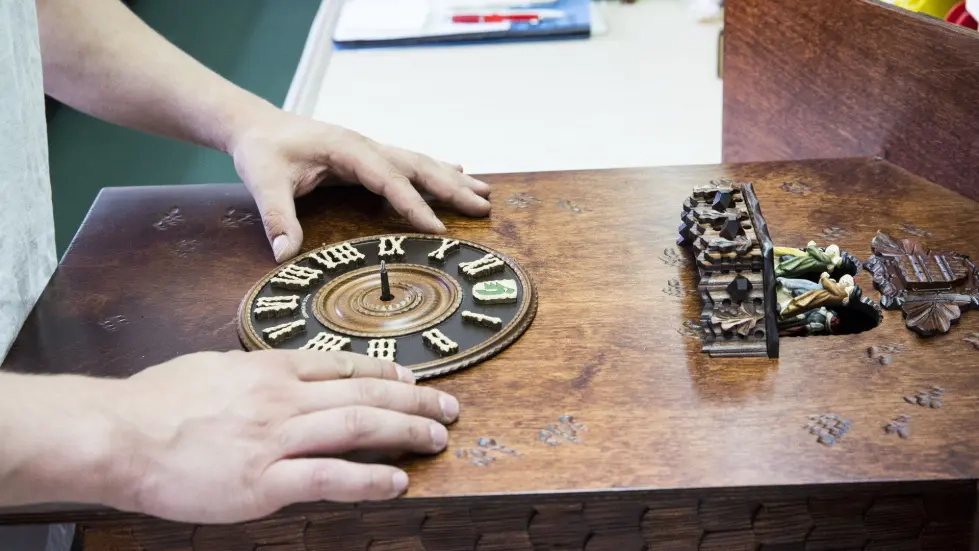
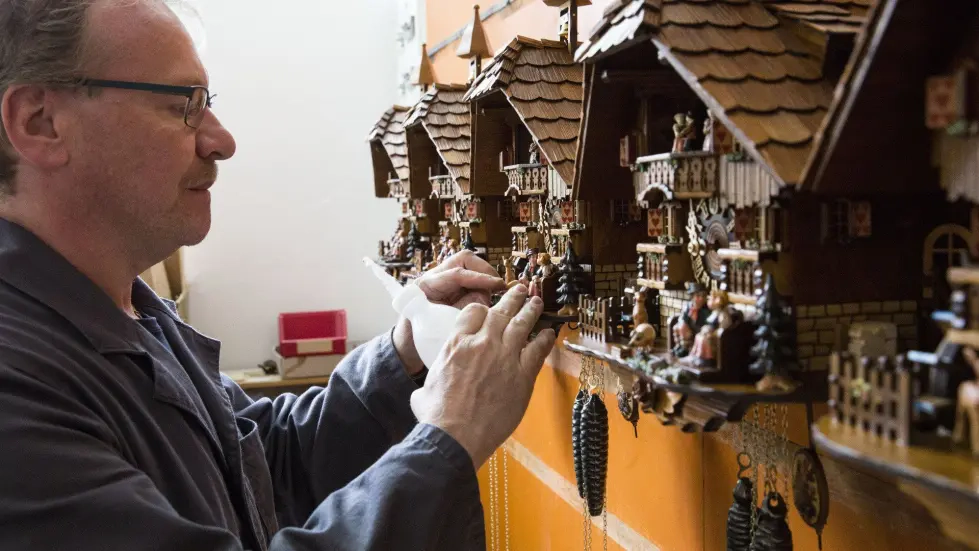
On a musical cuckoo clock, the third weight drives a music box that takes over after the call. On a 1-day movement, it often plays on the hour and the half hour; on an 8-day movement, usually only on the hour. The figures move at the same time, as on this woodchopper chalet.
The shut-off lever
For a quiet night, a lever on the side or under the case silences the call and the music without stopping the clock. Simply switch it back in the morning.
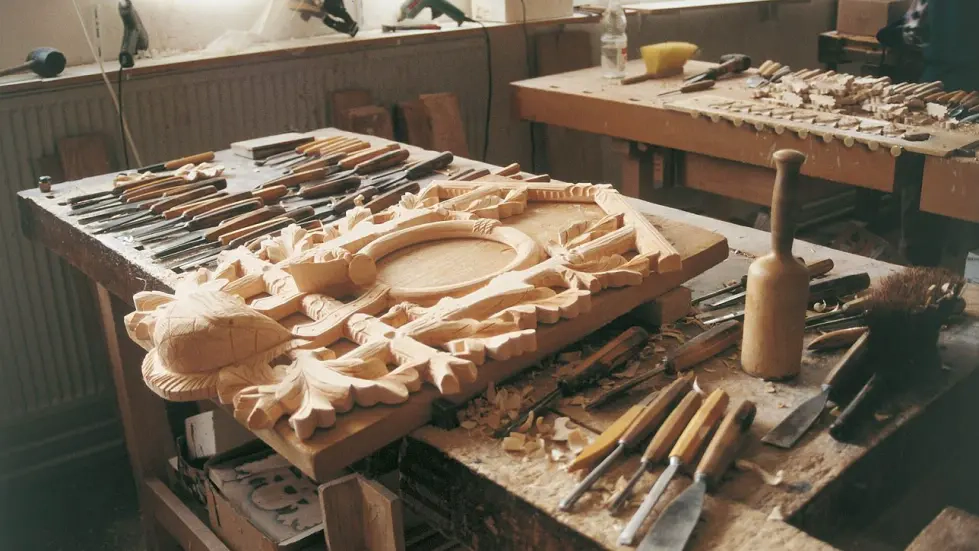
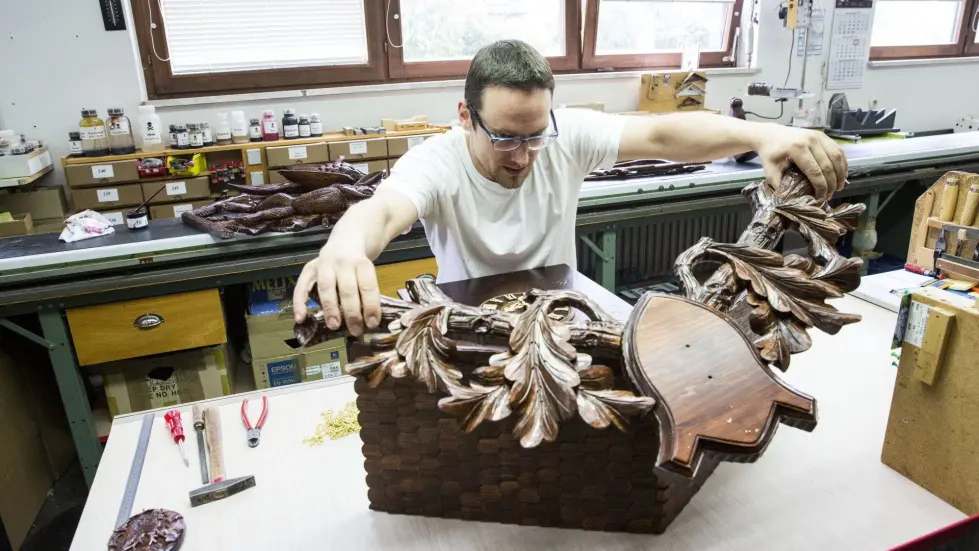
The first Black Forest cuckoo clocks had movements made entirely of wood, wheels included. The principle has not changed: weights, a pendulum and two bellows. To compare with a battery-powered model, see our guide mechanical or quartz.