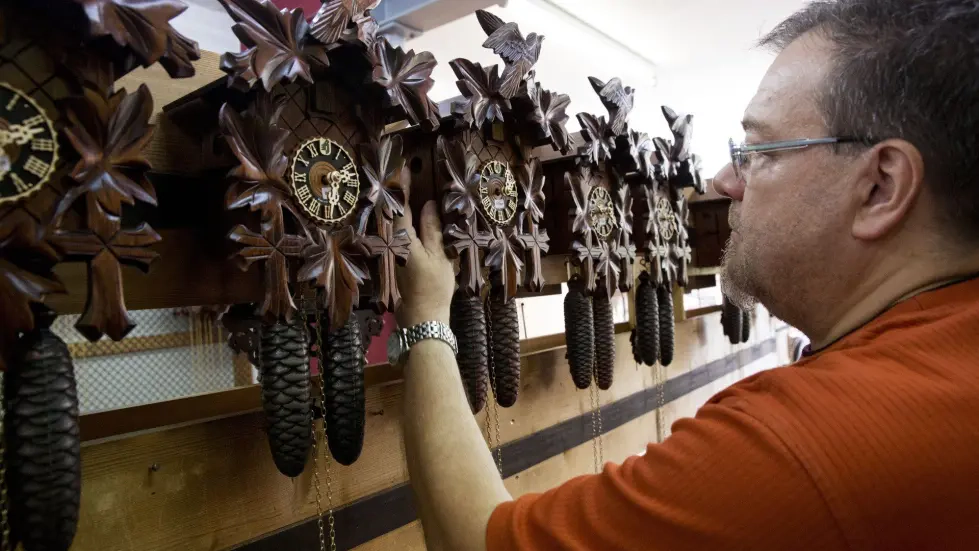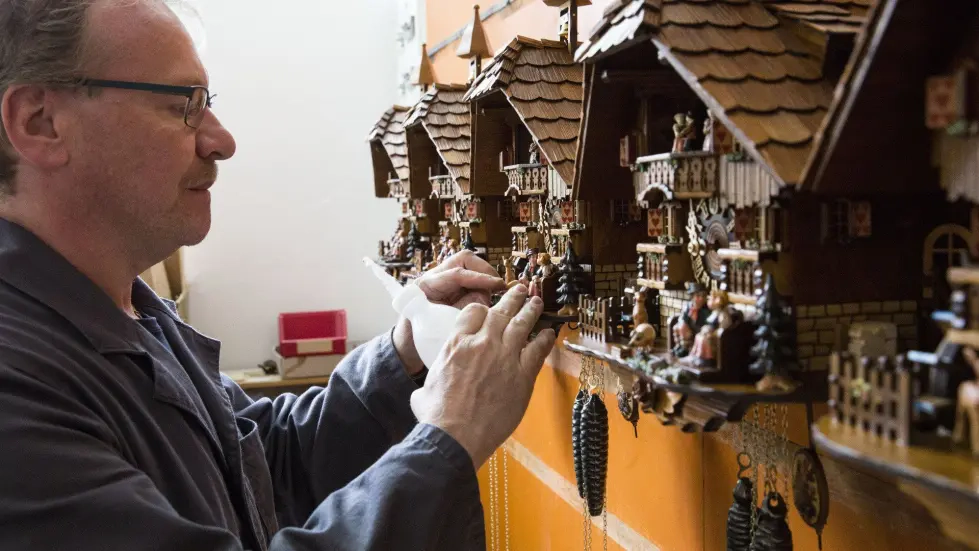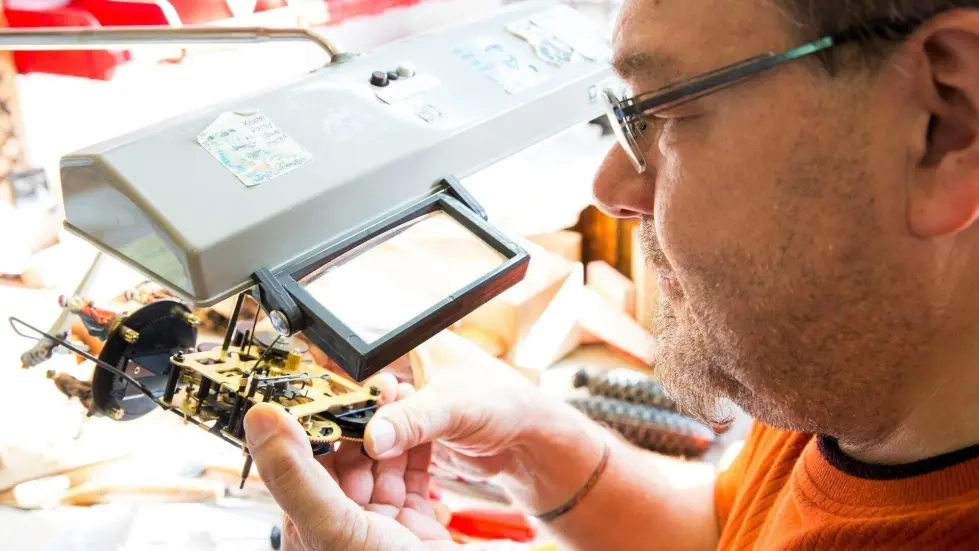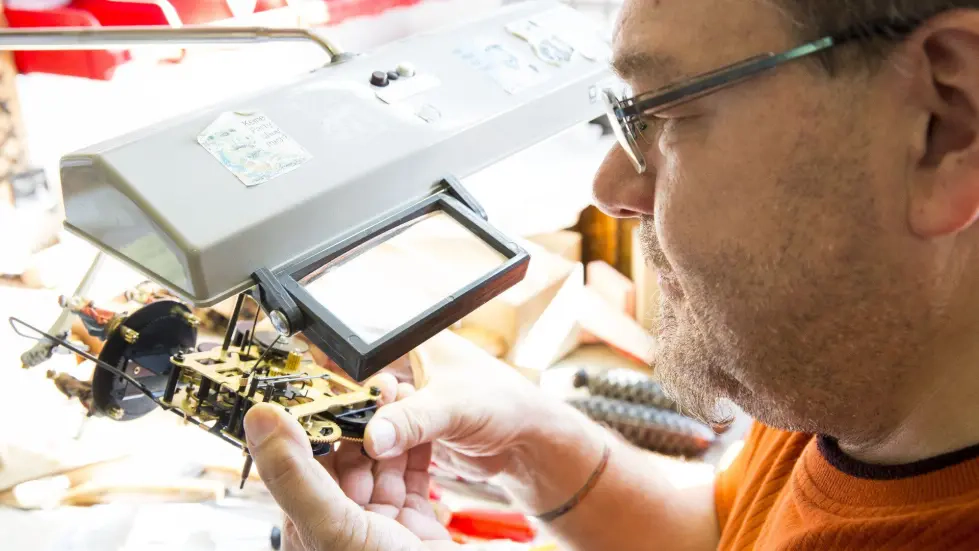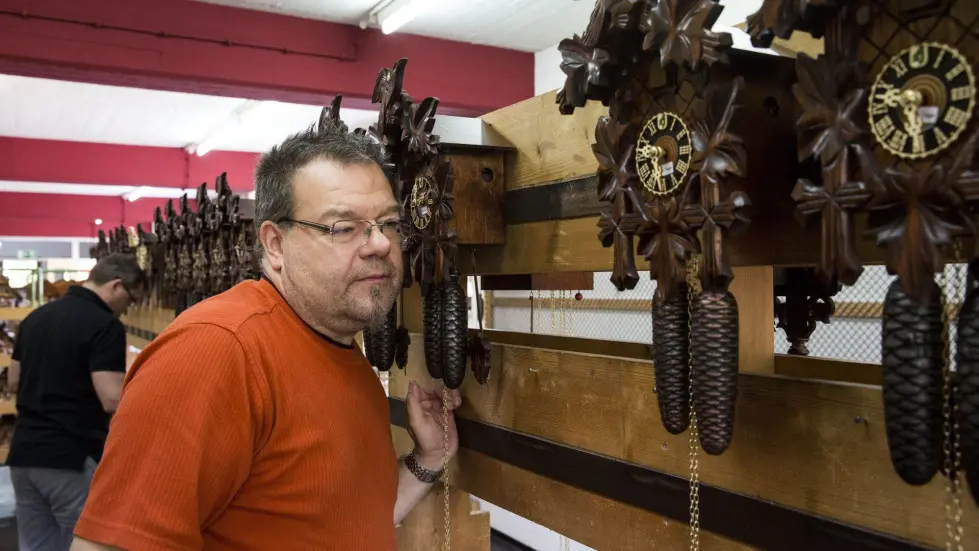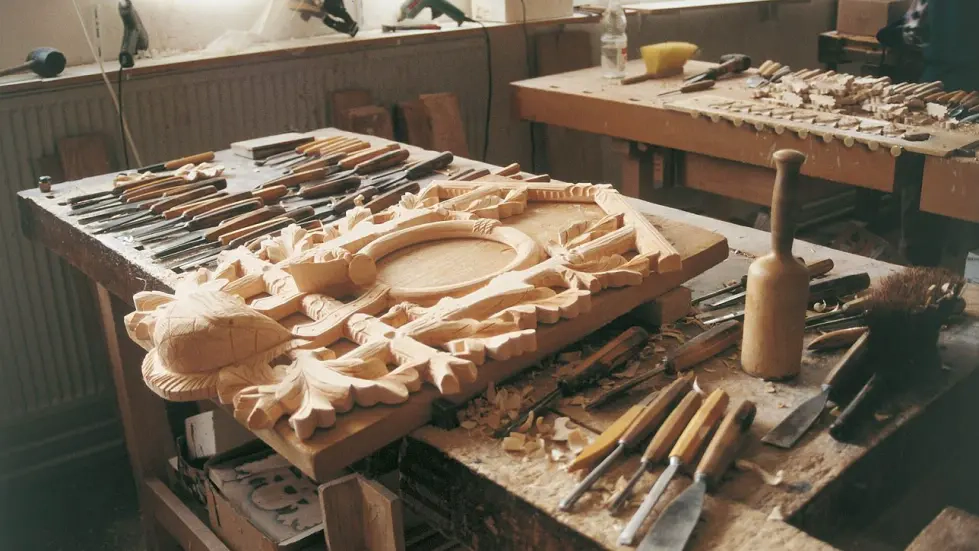
The success of the Black Forest cuckoo clock has given rise to many copies. Yet a few clues help you recognize a genuine cuckoo clock, starting with its VdS certificate.
What is the VdS certificate?
The certificate is issued by the Verein die Schwarzwalduhr (VdS), an association founded in 1987 in Schonach, in the heart of the Black Forest. It brings together manufacturers, suppliers, retailers and collectors around one goal: protecting the origin of the Black Forest cuckoo clock, for which it has registered a collective trademark.
Written in German and English, this certificate of authenticity comes with every clock that meets its criteria.
The criteria
To obtain the certificate, a cuckoo clock must:
be made in the Black Forest;
run on a mechanical movement: a quartz or solar-powered model cannot obtain it;
have a case, carvings, balconies and shingles preferably made of wood;
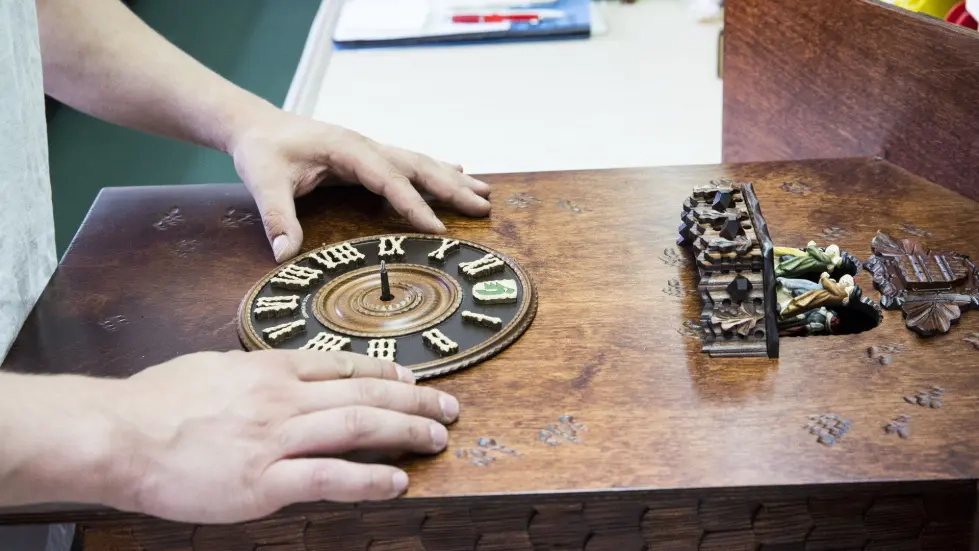
use parts made in the region for everything related to the call and the animations (dial, hands, weights, whistles), as long as they can still be made there.
So the lack of a certificate on a quartz cuckoo clock does not mean it is a copy: its movement is what excludes it, even when it is made in the Black Forest.
Other signs of a genuine cuckoo clock
Beyond the certificate, a few clues never lie:
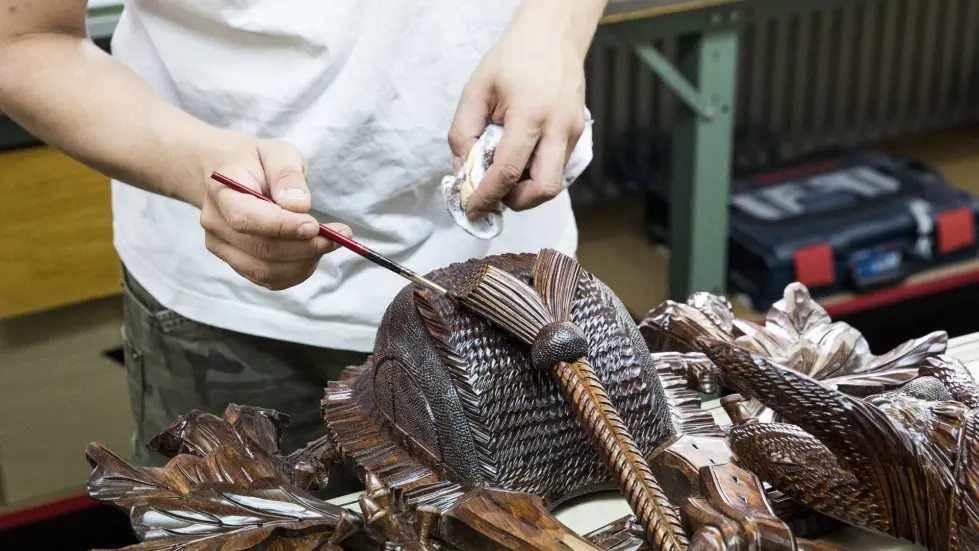
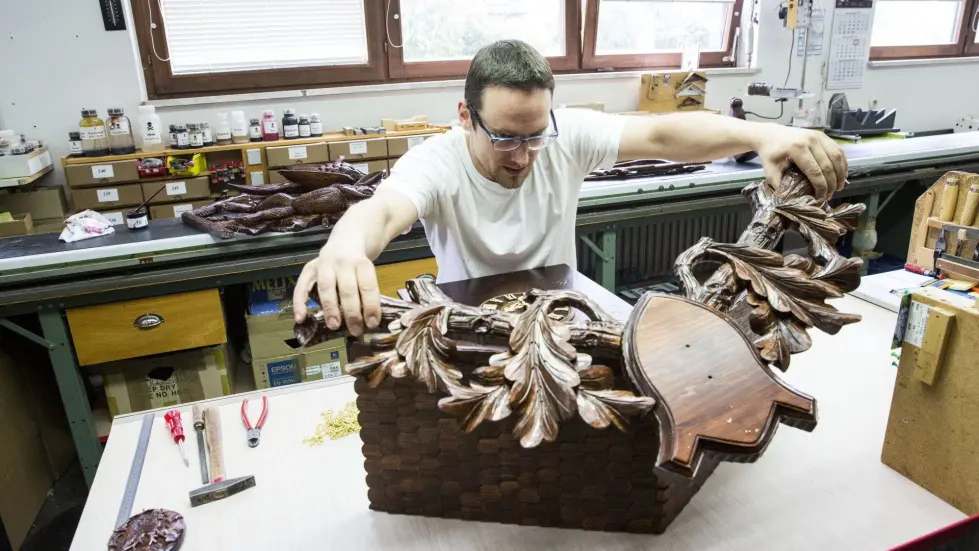
The wood: the case and decoration are made of wood, often linden, and the details are carved rather than molded in plastic.
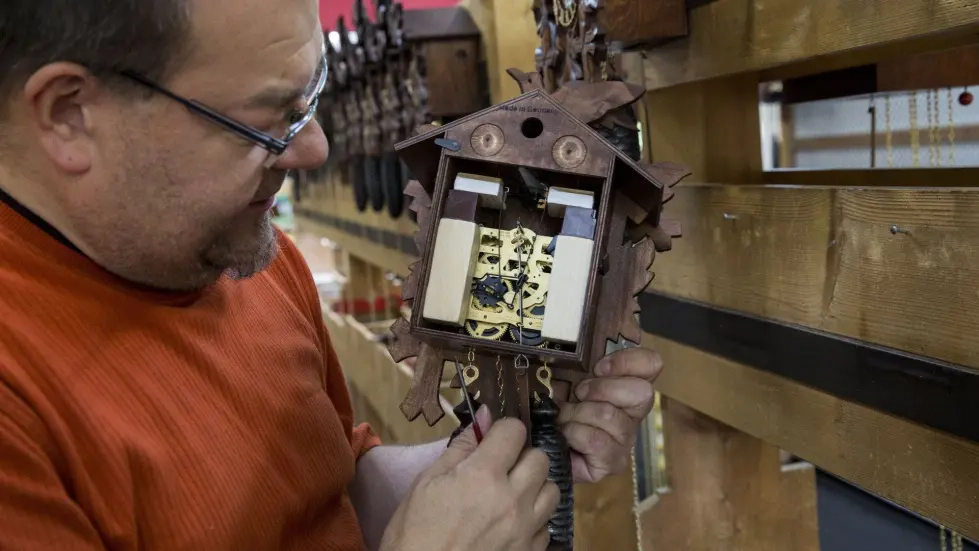
The mechanism: a mechanical cuckoo clock runs on weights and chains, and its call comes from two bellows.
The origin: the words “Made in Germany” or “Black Forest” and the maker’s name appear on the clock or its paperwork.
The seller: a specialist retailer knows where each piece comes from.
Certified manufacturers
The VdS publishes the list of makers whose cuckoo clocks are certified. It includes the two manufacturers we carry: Hönes, in Titisee-Neustadt, and Engstler, in Villingen-Schwenningen.
Our mechanical cuckoo clocks come with their VdS certificate of authenticity. To find yours, browse our collection.