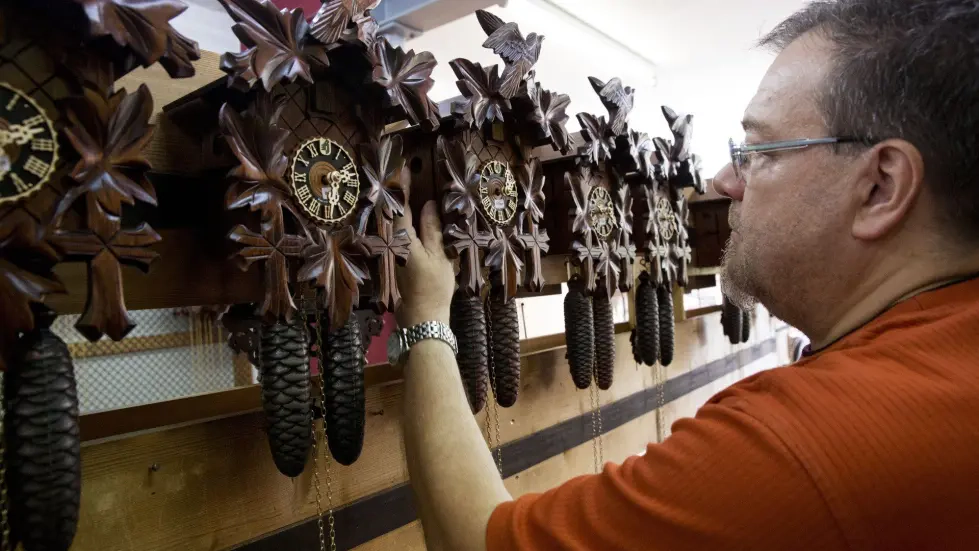
A Black Forest cuckoo clock can last for generations. All it takes is a few simple habits: regular winding, setting the time without forcing it and a service by a clockmaker from time to time.
Winding your mechanical cuckoo clock
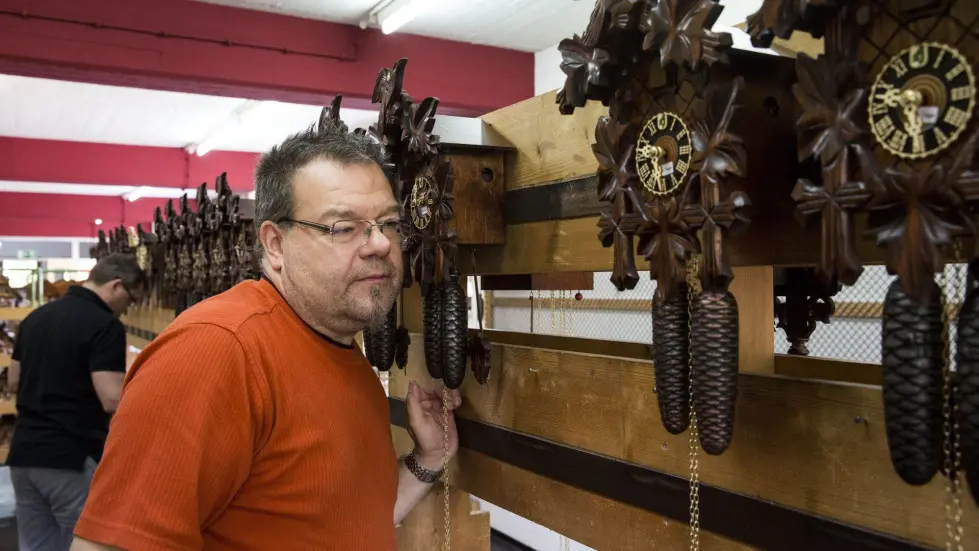
Winding is done with the chains, never with the weights. Pull gently and steadily on the free end of each chain until the weight rises up under the case. On an 8-day movement, whose weights are heavier, you can lightly support the weight with your other hand to ease the movement.
How often depends on the movement: every day for a 1-day model, ideally at the same time, and once a week for an 8-day model. The weights do not all descend at the same speed, and that is normal: the time weight works continuously, while the call and music weights only work when the cuckoo sounds.
A quartz cuckoo clock needs no winding: you simply change its batteries from time to time.
Setting the time
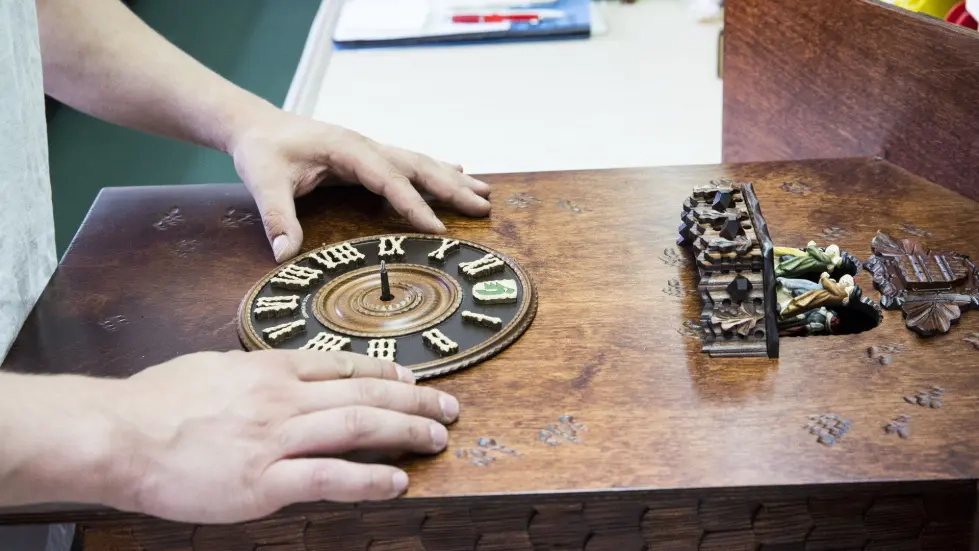
Never touch the hour hand: it follows the minute hand on its own. Only turn the minute hand, clockwise, pausing at each hour and half hour. Let the cuckoo call, and the melody finish on a musical cuckoo clock, before you continue.
Some movements also allow the minute hand to be turned backwards, with the cuckoo resetting itself. Check your model’s instructions before doing so.
Correcting a clock that runs fast or slow
Watch your cuckoo clock for 24 hours before making any adjustment. If it runs fast, move the pendulum disc down slightly; if it runs slow, move it up. A few millimetres are enough: according to the VdS, moving it by 3 mm changes the rate by about 3 minutes a day.
If the tick-tock is uneven, the clock is probably not hanging straight. Shift it very slightly to the left or right until the beat is even.
Dusting and protecting the case
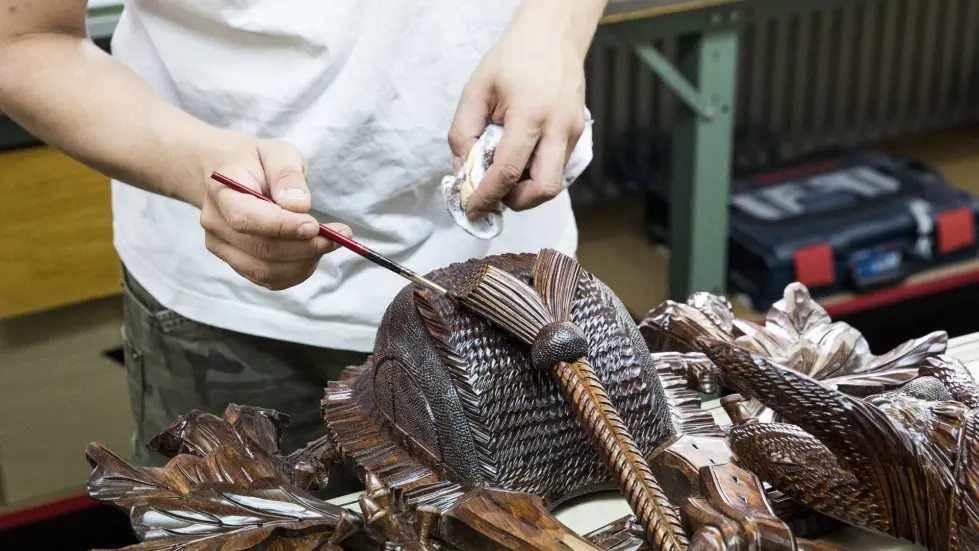
Dust the carved wood with a soft, dry brush, without any product or damp cloth. To preserve it, avoid damp rooms and heat sources such as a radiator or fireplace, which are hard on the wood.
Having the movement serviced
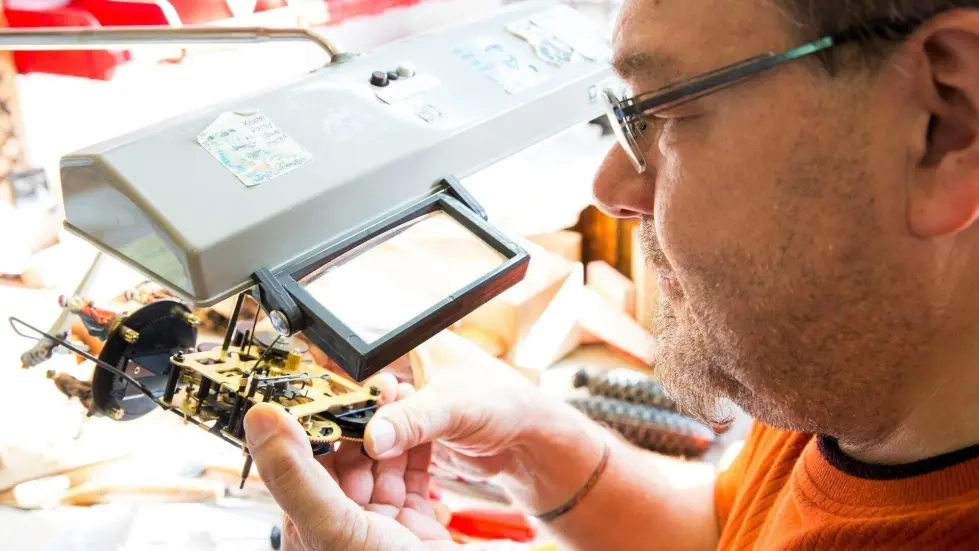
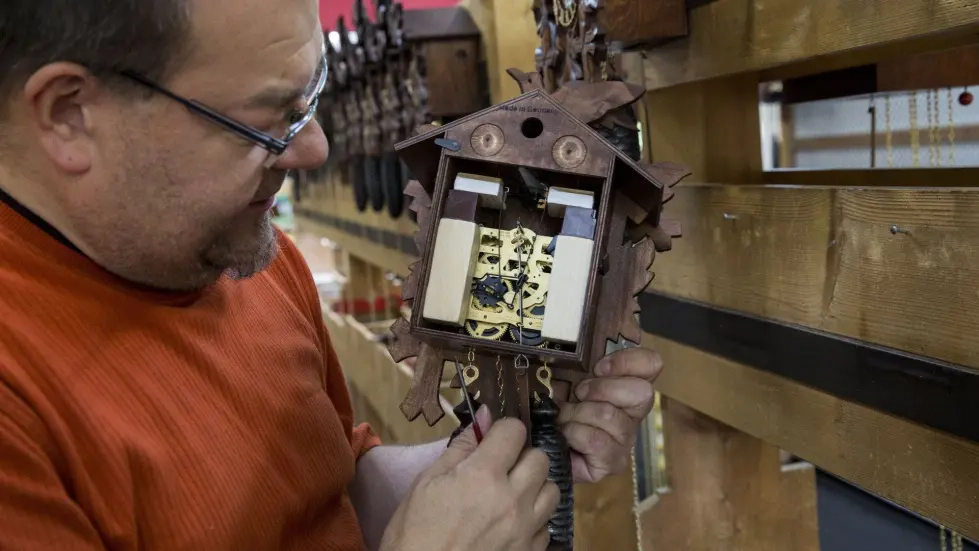
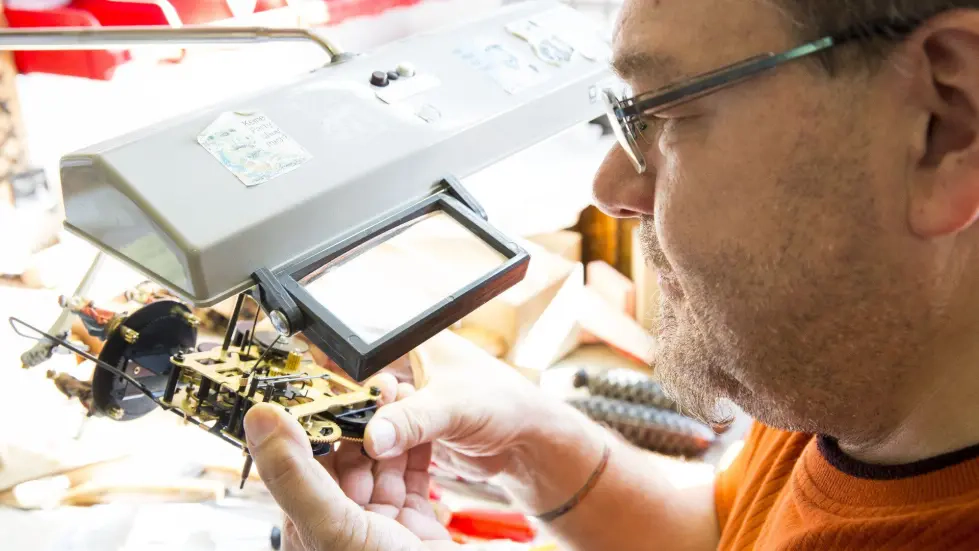
A mechanical movement should be cleaned and oiled every two to three years. Entrust this service to a clockmaker: they remove the old oil and dust, then apply just the right amount. It is best not to oil it yourself, as one drop too many attracts dust.
If your cuckoo stops calling, first check the shut-off lever, on the side or under the case, before calling a clockmaker: it must not be stuck between two positions.
Preparing your cuckoo clock for transport
For a move or before sending it for a service, pull the weights all the way up, then unhook them along with the pendulum. Then tie the chains together with a piece of string, as close to the case as possible, so that they do not slip off their wheels. Never lay a cuckoo clock down if its chains are not tied.
With these simple habits, your cuckoo clock will keep a clear call and accurate time for years to come. Still unsure which model to choose? Compare the two options: mechanical or quartz.